Paid vs. Organic: Which Is Better for Validating Your Landing Page?

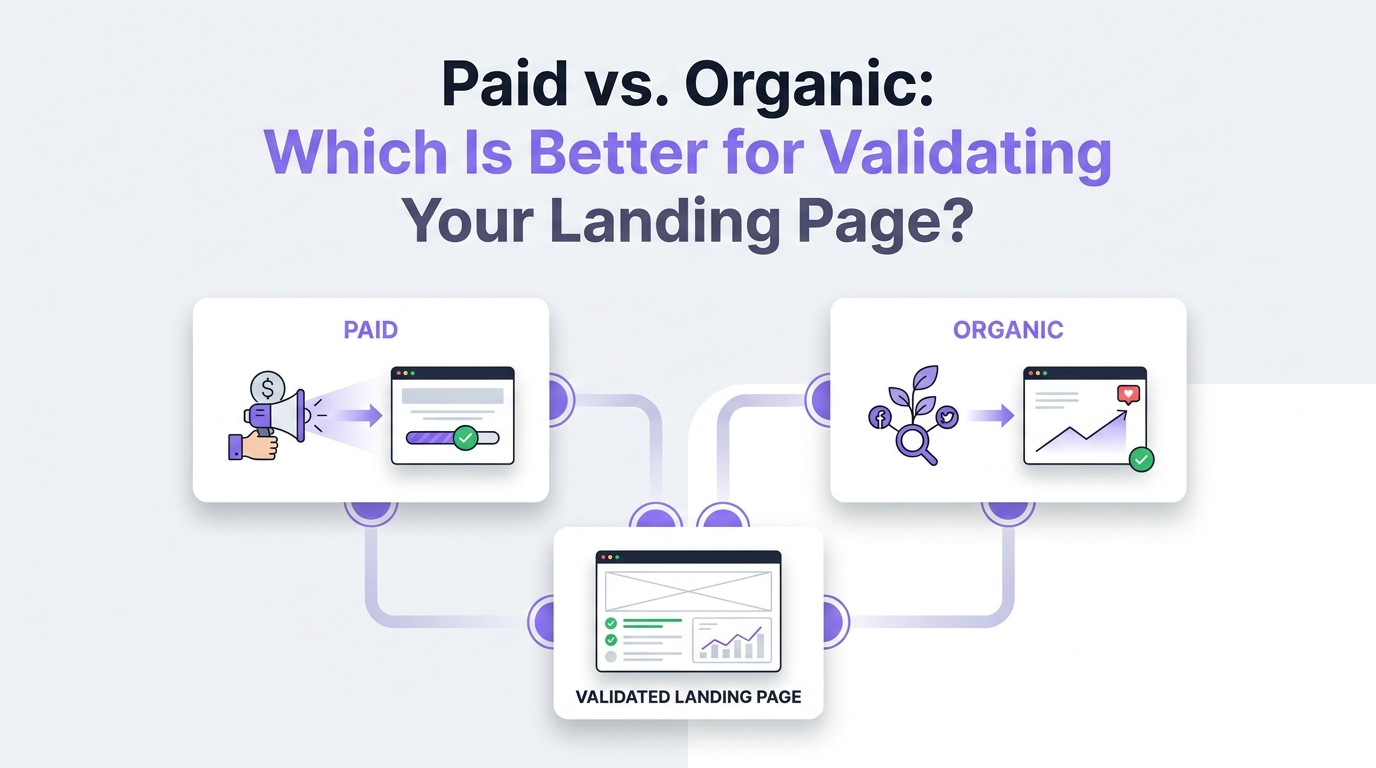
You’ve built the MVP. You’ve sweated over every line of copy. You’ve even spent an embarrassing amount of time debating whether the "Join Waitlist" button should be "Electric Blue" or "Midnight Navy."
But now you’re staring at a live URL and a visitor count of zero.
For solo founders, this is where the real work begins. The old "build it and they will come" mantra is dead—buried under a mountain of noise and algorithms. Today, validation requires a distribution strategy that actually works for a one-person team. This often involves shifting from a build-centric focus to high-value industry participation to get your first 10 B2B SaaS customers.
The question isn't just "How do I get traffic?" It’s "How do I get the right people to look at this before I run out of steam (or money)?"
When it comes to landing page validation, you’re usually looking at two paths: Paid Advertising (the sprint) and Organic Social (the marathon). Choosing the wrong one for your current stage is the fastest way to waste three months of your life or $2,000 of your savings.
Here is how to weigh your options.
Paid Advertising: Speed, Data, and the "Slot Machine" Risk
Paid ads (Meta, Google, LinkedIn) are the go-to for founders who have a little cash and a lot of impatience.
The Good Stuff
- Instant Gratification: You can go from zero to 500 visitors by lunchtime. If you need to know right now if your value proposition lands, ads are the fastest feedback loop on earth.
- Laser Targeting: You don't have to hope the right person sees your post. You can literally tell Meta, "Show this only to SaaS founders in Austin who use Shopify."
- Clean Metrics: Because you control the flow, your conversion data is "clean." You know exactly where people came from and what they did.
The Reality Check
- The Financial Sting: For a bootstrapper, $500 spent on "failed" ads isn't just a learning experience—it’s a mortgage payment or six months of server costs.
- The Trust Gap: People are savvy. We’ve all developed what researchers call banner blindness, where we subconsciously ignore anything that looks like an ad. When you pay for a click, you’re starting from a position of skepticism.
- The "Why" Problem: An ad can tell you that someone didn't click, but it won't tell you why. Was the price too high? Was the headline confusing? Ads give you numbers, but they rarely give you insights.
Organic Social: Building Trust (and a Personal Brand) in Public
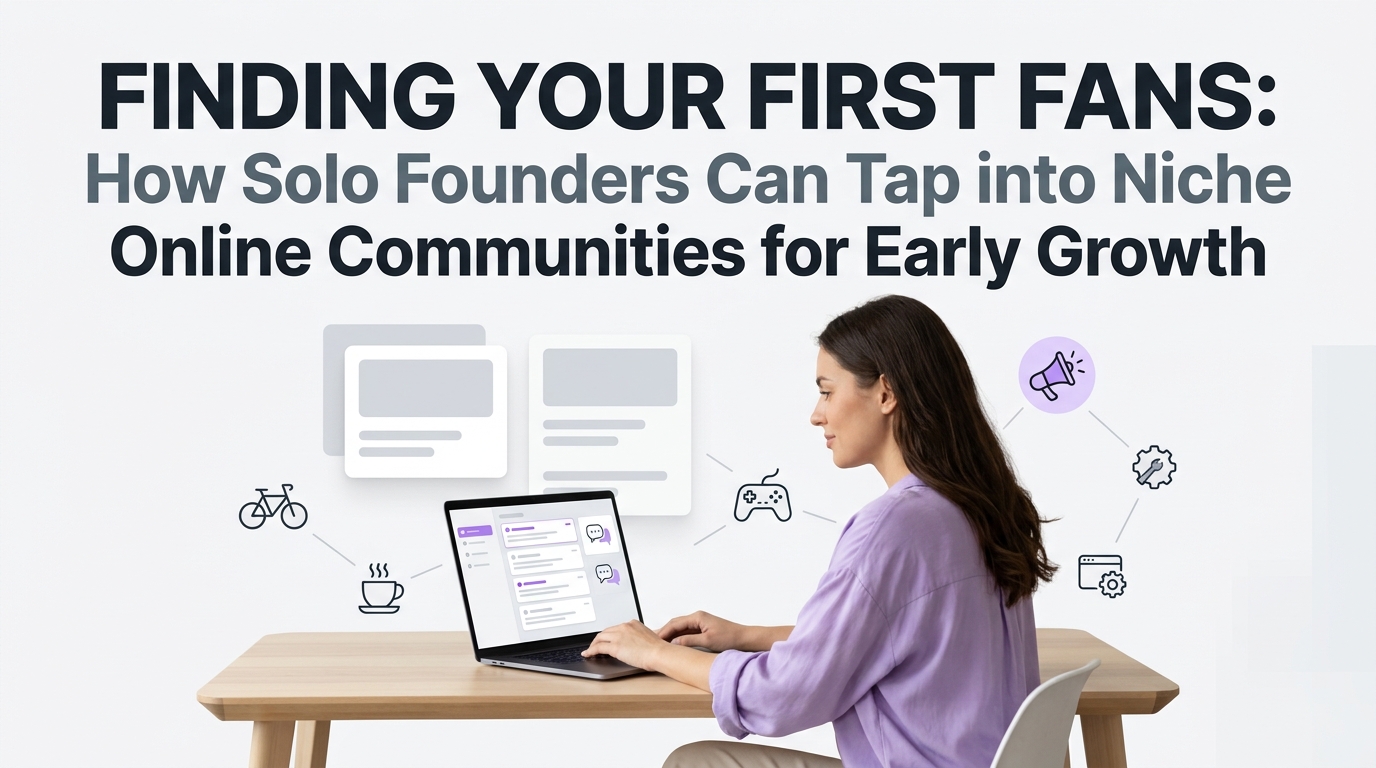
Organic distribution is about showing up where your audience hangs out, sharing your journey, and being genuinely helpful.
The Good Stuff
- Zero Dollar Entry: Your only investment is your time and your brain.
- The Trust Factor: People buy from people. When you build in public or solve someone’s problem in a community thread, you aren't a faceless company; you’re a founder. That trust carries over to your landing page.
- High-Quality Feedback: A single comment can be more valuable than 1,000 ad impressions. Organic social allows for two-way conversations that can fundamentally shift your product roadmap.
The Reality Check
- The Algorithm Lottery: You are at the mercy of platforms that want you to stay on their site, not click away to yours. A post you spent three hours on might reach ten people, while a random meme gets thousands of views.
- The Time Sink: Growing an audience is a full-time job. If you’re trying to validate an idea this week, waiting for the algorithm to love you can feel like watching paint dry.
Why Validation is More Than Just a Numbers Game
The biggest mistake I see solo founders make is treating validation like a math problem. They think: "1,000 visitors + 20 signups = Success."
But at the early stage, you don't just need signups; you need high-intent conversations. You need to know if you’re solving a "bleeding neck" problem or just a "nice to have" inconvenience.
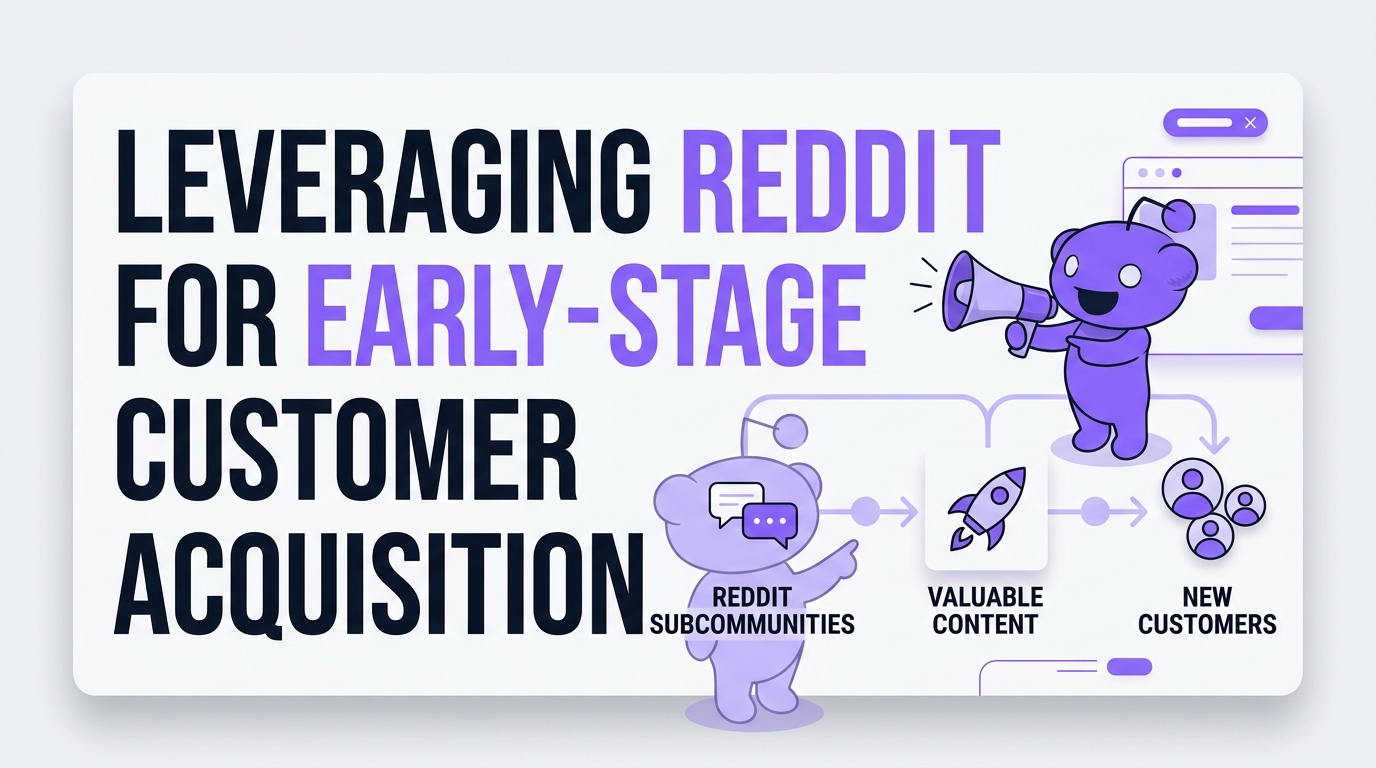
This is where the middle ground—Strategic Outreach—wins every time. Instead of shouting into the void, successful founders scale their outreach authentically using AI to find where their customers are already talking and join the conversation without losing their personal voice.
This is exactly what we built Kuverly to do. We help founders bridge the gap between "no budget" and "needing traction." By using semi-automated outreach that actually feels human, you can build trust at scale. It’s about making sure your landing page is being judged by your ideal customers, not just bot traffic or "curiosity seekers."
The Decision Framework: Which Path is Yours?
Ask yourself these three questions to decide where to put your energy:
- Is your market "Problem-Aware"? If people are already searching for a solution, paid search is great. If you’re solving a problem they don't even realize they have yet, you must use organic and outreach to educate them first.
- What is your "Burn Tolerance"? If you have a budget you’re comfortable losing in exchange for data, run ads. If you are unsure of the potential return, use a content marketing ROI calculator to justify the investment of your time versus cash.
- Do you need "Users" or "Insights"? If the product is polished and you just need volume, go paid. If you’re still figuring out if your headline makes sense, the qualitative feedback from organic interactions is worth its weight in gold.
The Solo Founder’s Playbook: The Hybrid Approach
The most effective strategy for 2024 and beyond isn't "either/or"—it’s a smart mix.
- Step 1: 70% Outreach & Content. Spend your time in the trenches. Answer questions in niche communities, post helpful threads, and use Kuverly to find and join relevant conversations. This builds your "Trust Foundation."
- Step 2: Micro-Ads for Retargeting. If you have a tiny budget, don't waste it on cold traffic. Use it to "retarget" people who have already visited your site through your organic efforts. It keeps you top-of-mind for pennies.
- Step 3: Iterate and Activate. Use the actual words people use in your comments and DMs to rewrite your landing page. Once you have users hitting the page, make sure you fix the "leaky bucket" problem to ensure those hard-won visitors actually turn into active users.
The Bottom Line
Validation isn't about proving you’re right; it’s about finding out where you’re wrong as quickly and cheaply as possible.
As a solo founder, your time is your currency, but your reputation is your leverage. While ads can buy you eyeballs, they can’t buy the trust that comes from being a helpful, present founder. Build the relationship first, and the traction will follow.
Get actionable content marketing tips - straight to your inbox.
Join the Kuverly newsletter for proven strategies, fresh content ideas, and AI marketing tips. No spam, just value.