Beyond the "Friends and Family" Phase: How to Land Your First 10 Real Customers

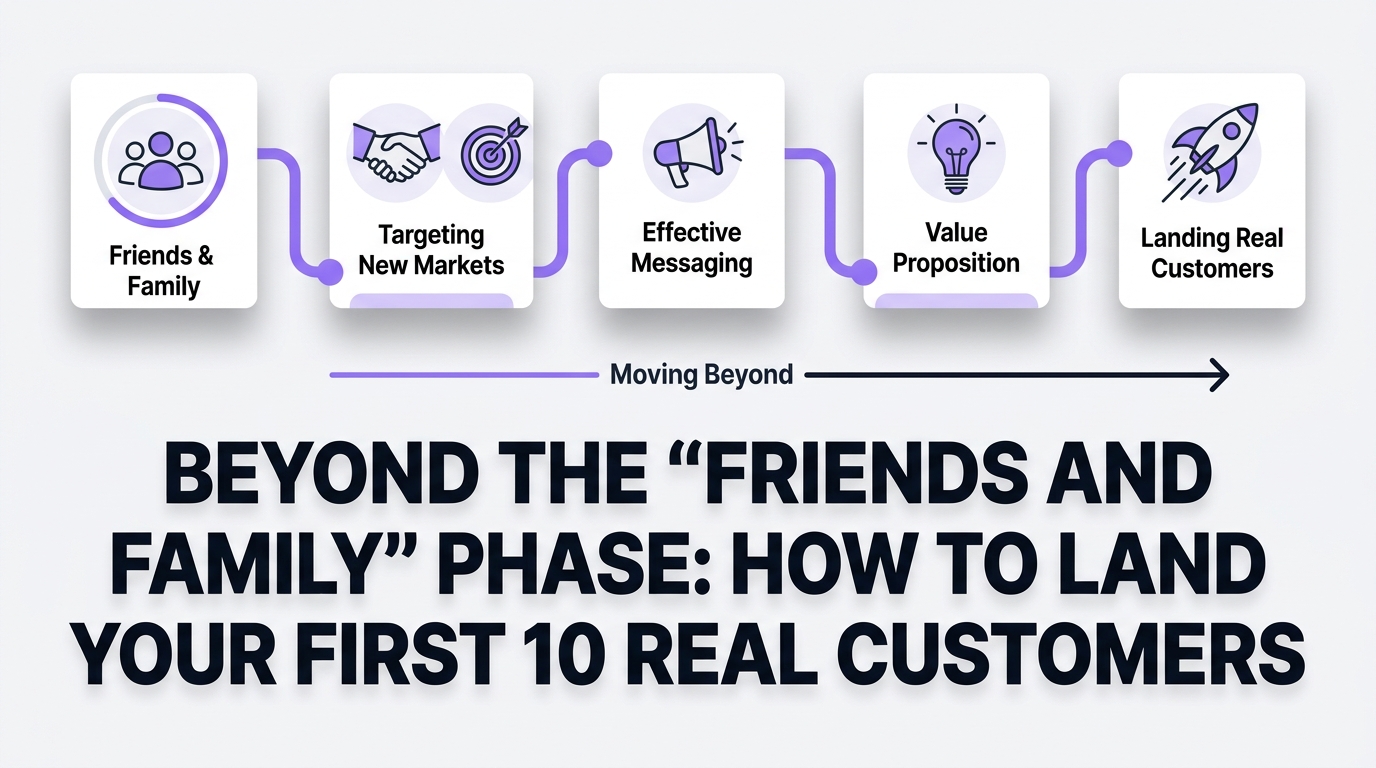
The "build it and they will come" mantra is perhaps the most expensive lie in the startup world. This myth often leads entrepreneurs down a path of wasted effort and silence. As we explore in our distribution guide for solo founders, simply creating a product is never enough to guarantee an audience.
You’ve spent weeks, maybe months, obsessing over every pixel of your Minimum Viable Product (MVP). You finally hit "Launch" on Product Hunt, post a celebratory social media update, and then… nothing. Just the sound of digital crickets and a few pity likes from your cousins.
For a solo founder, waiting for "viral luck" or SEO to kick in isn't a strategy—it’s a form of procrastination. Traditional marketing advice will tell you to optimize your ad spend or focus on long-term content plays. But when you have zero traction and a budget of $0, those methods are either too expensive or too slow.
To get your first 10 non-network customers—people who don’t know you and don’t owe you a favor—you have to do something uncomfortable: you have to go find them. This process requires shifting from a build-centric focus to high-value industry participation.
Here is how to execute a manual outreach strategy that builds genuine trust, validates your product, and secures those crucial early adopters.
Why "Volume" is the Enemy of the Solo Founder
Most founders mistake "outreach" for "spamming." They think the goal is to blast 500 cold DMs a day and hope for a 1% conversion rate. In the early stages, this is a massive mistake. It kills your brand’s reputation before you’ve even built one.
If you don’t yet know which specific words trigger a "yes" from your audience, blasting a script to hundreds of strangers is just a fast way to get blacklisted.
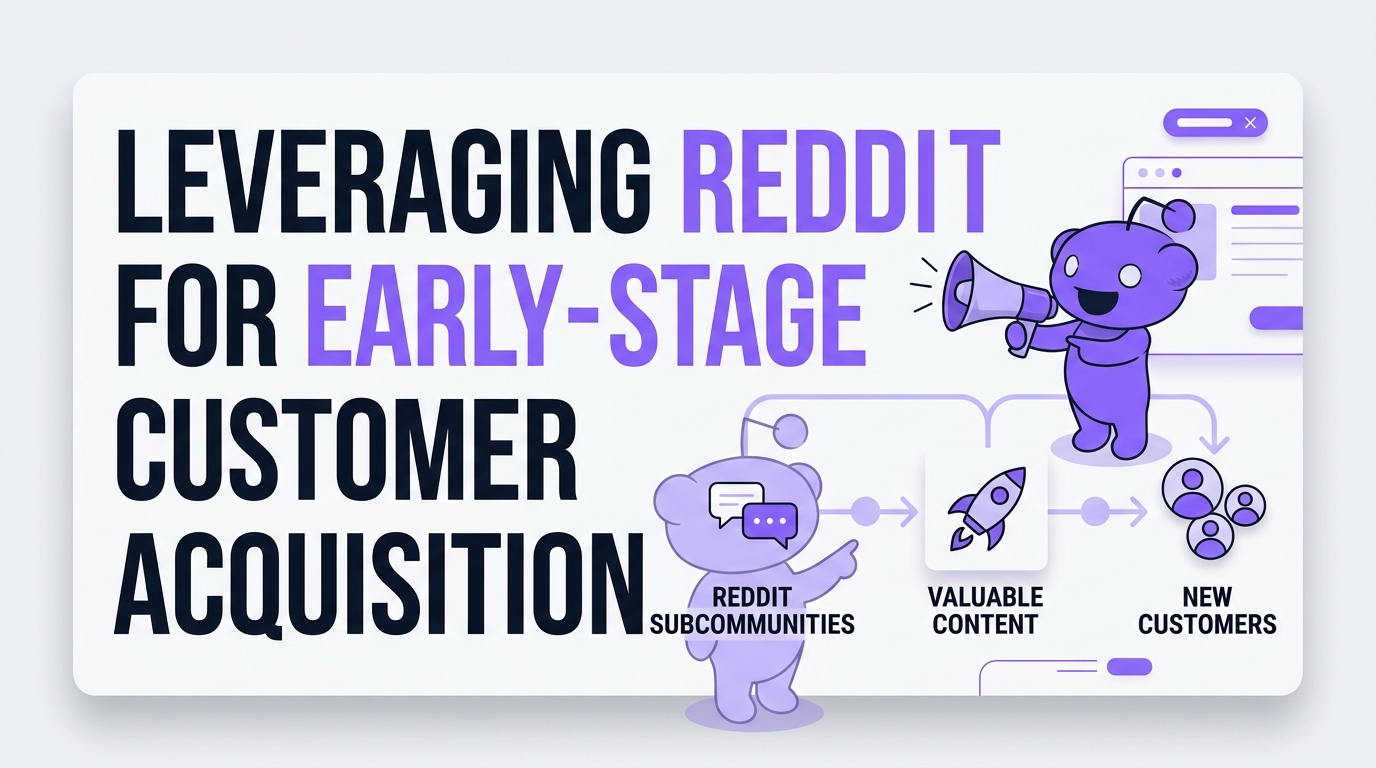
Instead, your first 10 customers will come from being the most helpful person in the room. Trust is the only currency that actually scales in high-intent communities like Reddit or niche Discord servers. Your goal shouldn’t be to "close a deal"; it should be to find a stranger with a specific pain point and offer a bridge to a solution.
1. The Comment Section is Your New Sales Funnel
Public comment sections are infinitely more effective than cold DMs. When you DM someone, you’re an interruption. When you respond to a public post where someone is venting about a problem, you’re a contributor. By treating these interactions as a sales funnel, you can guide users from awareness to interest organically.
The Playbook:
- Hunt for the "Pain" Posts: Look for threads where people are complaining about specific workflows or existing tools.
- The 90/10 Rule: Give 90% of the solution away for free. Explain how they can solve their problem manually or offer a perspective they haven't considered.
- The Soft Pivot: Only mention your product as a way to automate or simplify the advice you just gave. "I actually built a small tool to handle step 2 and 3 automatically if you want to try it."
By winning the comment section, you aren't just reaching the original poster; you’re reaching the hundreds of "lurkers" who are reading that thread silently. This is how you scale your presence without an ad budget.
2. Automate the Search, Not the Soul
As a solo founder, your time is your most limited resource. You can’t spend 24 hours a day refreshing subreddits or searching keywords.
You need to be present where the conversations are happening, but you shouldn't be the one doing the manual labor of finding them. This is where "smart" automation comes in. The key is to scale your outreach authentically by using a hybrid approach—letting technology handle the discovery while you handle the human connection.
Automating the discovery of potential leads—finding the right threads at the right time—is essential. But automating the response is a death sentence. People can smell a bot from a mile away. Use tools like Kuverly to monitor the internet for the exact conversations you need to join. Let the tech find the door; you be the one to knock and start the conversation. This keeps you human, helpful, and high-signal.
3. Build Social Capital Before You Need to Spend It
One of the biggest mistakes founders make is "parachuting" into a community only when they have something to sell. If your first post in a forum is a link to your app, you’ll be banned before the first click.
You should be active in your distribution channels weeks before your product is finished. Answer questions, share your progress, and be a "regular."
By the time you say, "Hey, I actually built something that fixes this specific issue we’ve all been talking about," you’ve already earned the social capital required for people to actually care. A slow-and-steady approach builds a brand; a "big bang" approach just builds noise.
4. Outreach is Your Best Reality Check
Manual outreach is a double-edged sword. It’s a growth tactic, but it’s also the ultimate "BS detector" for your business model. Many founders face a validation gap where they mistake social praise for actual market demand.
- If people engage with your comments but ignore your product, your solution might not be painful enough to pay for.
- If you can't find any threads discussing the problem you solve, you might be building a solution for a problem that doesn't exist.
Every "no" or ignored comment is a data point. Use these interactions to refine your messaging until you find the specific hook that makes a stranger say, "I need this. Is it ready yet?"
5. Do the Things That Don't Scale (Seriously)
The first 10 customers are the hardest because they require the most unscalable work. As Paul Graham famously argued, you must do things that don't scale to get a startup off the ground. You might have to jump on a 20-minute Zoom call with a stranger from a community group or build a custom feature just to satisfy your third user.
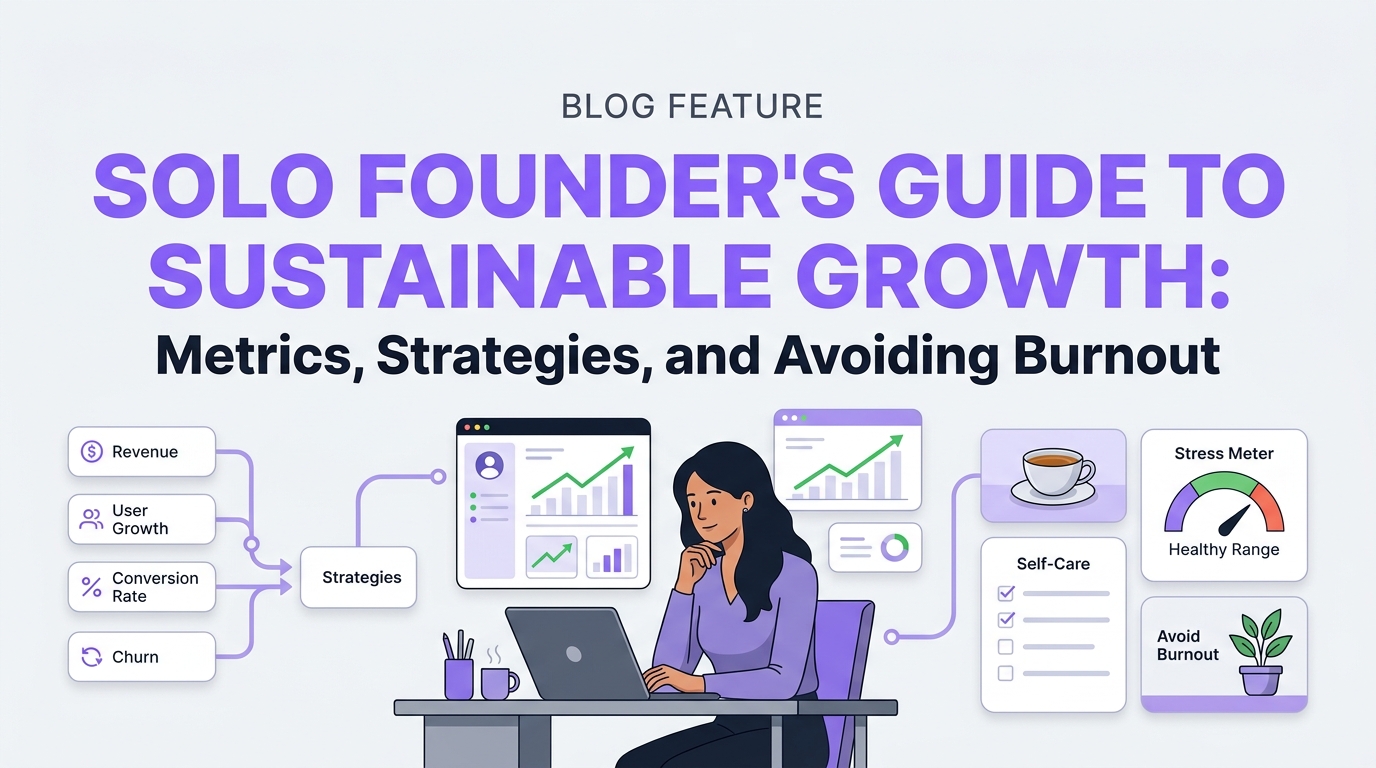
To succeed, you need to build a high-performance sales culture within yourself, focusing on daily inputs and disciplined engagement rather than just waiting for the math to work out.
Do it.
Traditional marketing is about "pushing" people into a funnel and hoping for the best. As a solo founder, you don't have the luxury of playing the numbers game yet. Your growth will come from being present, being helpful, and building trust one conversation at a time.
The Bottom Line
Getting your first 10 customers isn't about a "perfect" launch; it’s about being the most useful person in your niche. By focusing on public interactions and using tools to find those conversations efficiently, you can build a sustainable pipeline of early adopters without spending a dime on ads.
Ready to stop shouting into the void and start joining the right conversations? Kuverly helps founders find the exact moments where their expertise is needed, turning social media into your most effective growth engine.
Get actionable content marketing tips - straight to your inbox.
Join the Kuverly newsletter for proven strategies, fresh content ideas, and AI marketing tips. No spam, just value.