"Build it and they will come" is a lie: A distribution guide for solo founders

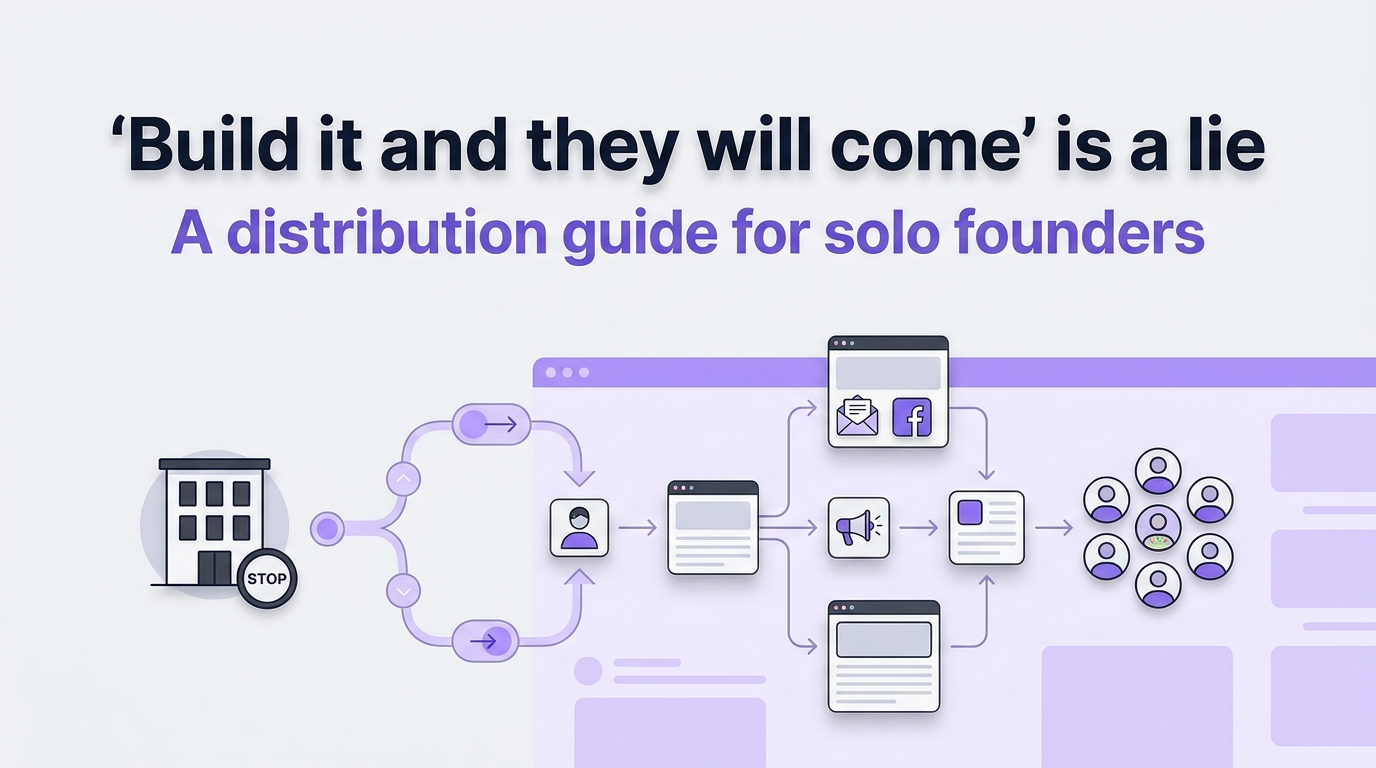
The "build it and they will come" philosophy is the fastest way to kill a solo startup.
As a founder, you’ve likely spent weeks—maybe months—obsessing over every pixel and line of code in your MVP. But when you finally hit "launch," the silence can be deafening. The problem usually isn't the product; it’s the distribution. Research into why startups fail often points to a lack of market need or poor marketing rather than technical failure.
When you’re a team of one with a marketing budget of zero, you simply cannot afford to "be everywhere." You don’t have the bandwidth to juggle a YouTube channel, a daily LinkedIn presence, a TikTok strategy, and a weekly newsletter. If you try, you’ll burn out before you hit your first 100 users.
To find traction, you need a framework to prioritize where your voice actually matters. Here is how solo founders can strategically pick their battles and find early users without losing their minds.
Quality Over Noise: The Foundation of Early Distribution
Before you pick a channel, you have to accept one hard truth: Noise is your enemy.
In the early stages, pushing out mediocre, automated tweets or generic "thought leadership" won't build the trust required for someone to try an unproven product. Your content shouldn't just exist; it should solve. This is why many successful founders repurpose their best content rather than trying to create something new every single day.
Every piece of content you put out should answer one question for the reader: "How does this solve the specific problem I’m dealing with right now?" If it doesn't do that, don't post it.
Framework 1: The ICE Method for Distribution
The ICE framework (Impact, Confidence, Ease) is a staple for product prioritization, but it’s a lifesaver for distribution. Rate every potential channel (Reddit, LinkedIn, niche forums, cold outreach) on a scale of 1–10:
- Impact: If this channel works, how much will it actually move the needle? (e.g., A viral post in a highly specific subreddit is high impact; a post on your personal Facebook is likely low).
- Confidence: How sure are you that your target audience is actually there and looking for solutions?
- Ease: How much effort does it take to show up? (e.g., A 2,000-word SEO pillar page is a 2/10 for ease; jumping into a Twitter thread is a 9/10).
The Solo Founder Strategy: Multiply these numbers. Start with the channels that have the highest total score. For most solo founders, this means prioritizing Ease and Confidence first. Small, consistent wins on "easy" channels build the momentum you need to tackle the high-effort ones later.
Framework 2: The "Intent vs. Density" Matrix
Not all traffic is created equal. You need to understand the "vibe" of the platform and the user intent behind the traffic before you post.
High-Intent Channels (The Problem Solvers)
These are places where people go specifically to find an answer.
- Examples: Reddit (searching for "How do I…"), Stack Overflow, Quora, or niche Discord/Slack communities.
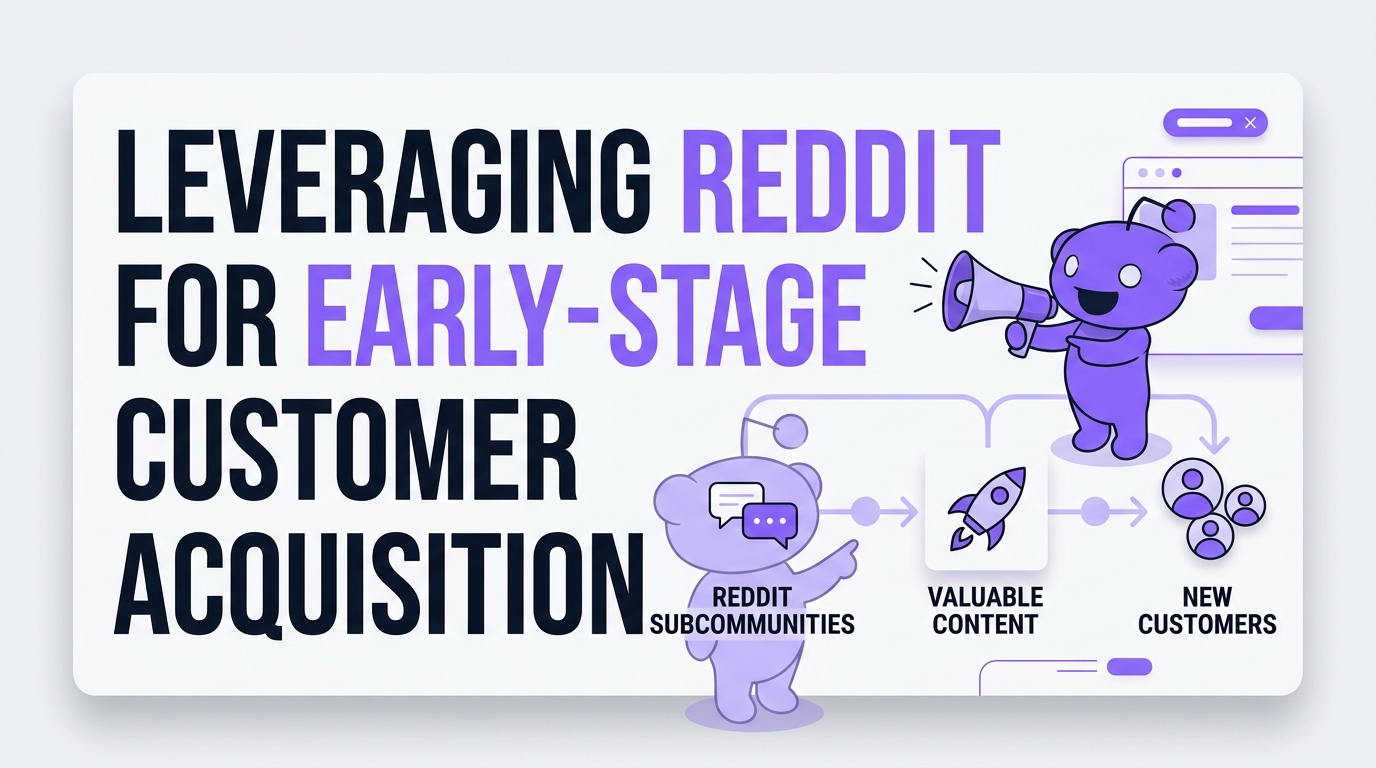
- Strategy: Don't just drop links—that’s spam. Join the conversation. Answer a question thoroughly, provide value, and only then mention how your product makes that solution easier. You can even leverage AI to identify these opportunities and craft responses that align with what users are searching for.
High-Density Channels (The Discovery Zones)
These are places where your audience hangs out, but they aren't necessarily in "buying mode."
- Examples: LinkedIn, X (Twitter), Hacker News.
- Strategy: Focus on "Building in Public." Share your lessons, your failures, and the "why" behind your product. You’re building authority here so that when they do have a problem, you’re the first person they think of.
For early-stage launches, Kuverly helps founders bridge this gap. It uses semi-automated outreach to help you join these conversations authentically, ensuring you’re present where the intent is highest without spending eight hours a day manually scrolling through threads.
Framework 3: The 70/20/10 Distribution Rule
To keep your marketing from eating your development time, allocate your "marketing hours" using this ratio:
- 70% Core Channel: Pick the one place where your audience is most active (e.g., LinkedIn). This is where you spend the bulk of your creative energy.
- 20% Secondary Channel: Pick a complementary platform. If your core is LinkedIn (professional/long-form), your secondary might be X (networking/short-form).
- 10% Experimental: Use a tiny sliver of time to test a wild card—like a micro-podcast appearance or a quick video demo on TikTok.
For many, managing this split is only possible by automating parts of the workflow, allowing you to maintain a presence on secondary channels while focusing on your core strategy.
Transitioning From Content to Conversation
The biggest mistake solo founders make is thinking that publishing is the same as distributing.
Distribution is a two-way street. Once you've posted something that explains your product's value, your job is to move those readers into a conversation. High-engagement distribution isn't about "likes"; it's about activating users and moving them toward their "Aha!" moment.
This is where "value-forward" outreach becomes your most powerful tool. Instead of waiting for users to stumble upon your blog, go find the people who are currently asking the questions your blog answers.
Moving Toward Sustainable Growth
When you have no marketing budget, your greatest asset is your ability to be human and helpful. By using a framework to prioritize your channels, you stop shouting into the void and start building a community of early adopters. To ensure your efforts are actually paying off, it's helpful to calculate your content marketing ROI regularly.
If you’re struggling to balance building a product with the grind of manual outreach, platforms like Kuverly are designed to help solo founders automate the trust-building process. By combining targeted content with smart, social outreach, you can get your product in front of the right people at the exact moment they need it.
The goal isn't to be the loudest person in the room—it’s to be the most helpful. Start with one channel, provide immense value, and the traction will follow.
Get actionable content marketing tips - straight to your inbox.
Join the Kuverly newsletter for proven strategies, fresh content ideas, and AI marketing tips. No spam, just value.