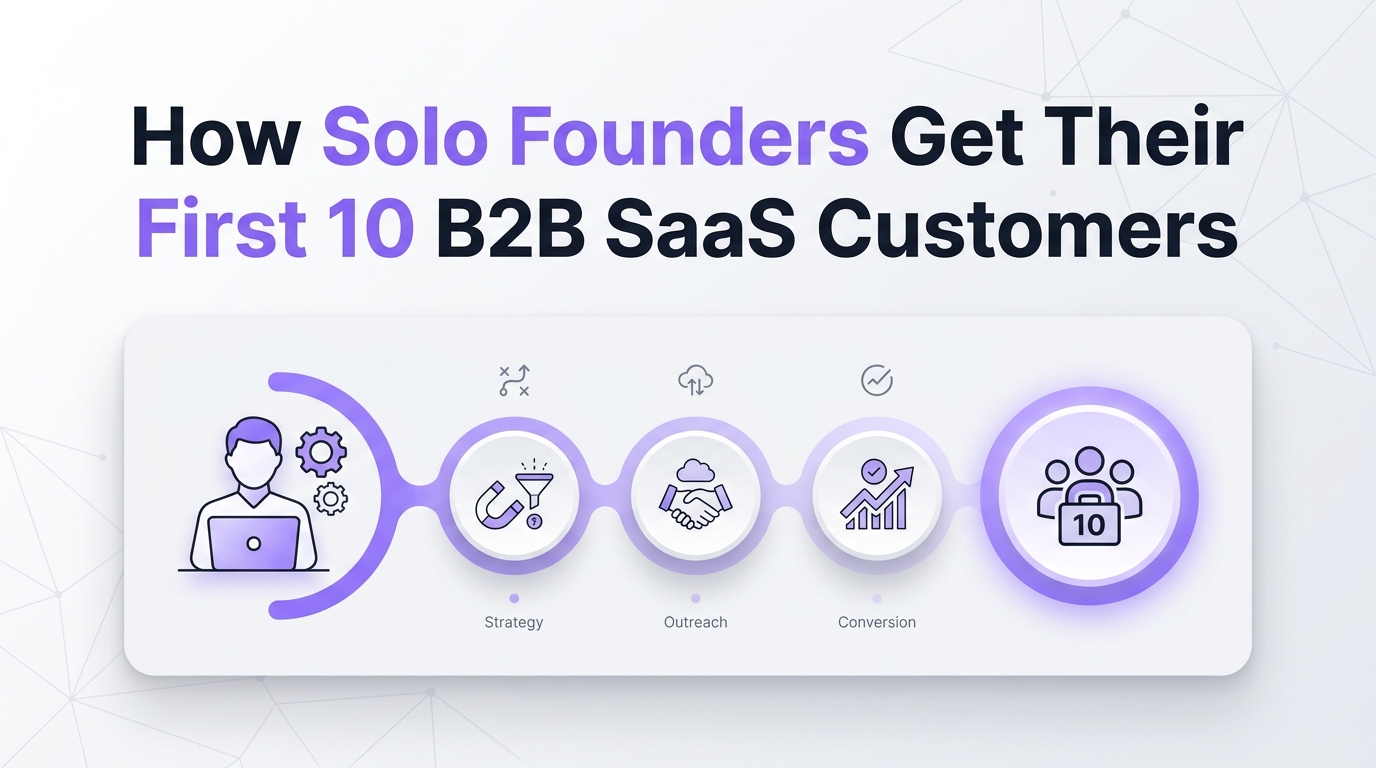
How Solo Founders Get Their First 10 B2B SaaS Customers

The "launch" of a B2B SaaS product is often romanticized as a cinematic climax—a celebratory moment where the world finally discovers your genius. But for solo founders, the reality is usually a lot quieter.
After the initial spike of traffic from a Product Hunt post or a LinkedIn announcement, the silence can be deafening.
The hardest part of building a one-person business isn’t the tech stack; it’s the distribution. You have no marketing budget, your SEO won’t rank for months, and the "build it and they will come" mentality is a trap that leads straight to a dead product.
Acquiring your first 10 B2B customers requires a psychological shift: you have to stop being a builder and start being a high-value participant in your industry. Here is how to navigate that transition without burning out or resorting to the kind of impersonal spam everyone hates.
1. Stop Hiding Behind "Organic Discovery"
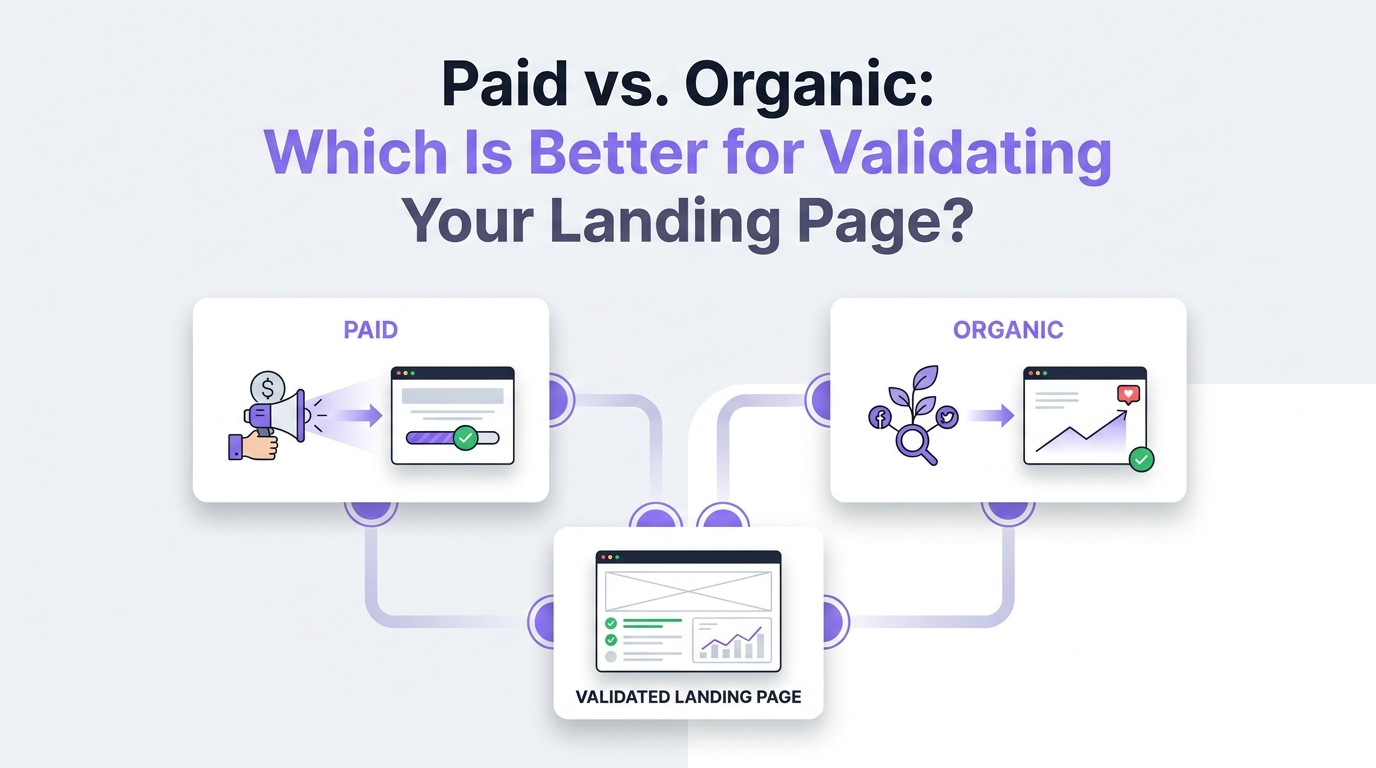
One of the most expensive mistakes a solo founder can make is treating SEO as a primary launch strategy. While high-impact SEO strategies are a powerful long-term asset that compounds over time, they won't solve your immediate need for traction.
Waiting for customers to find you via Google is often just a form of productive procrastination. It allows you to stay in your comfort zone—tweaking code or polishing the landing page—while avoiding the vulnerability of direct outreach.
For your first 10 customers, you don’t need a perfect website; you need high-intent conversations. Trust is the only currency that actually scales in niche communities like Reddit, LinkedIn, or industry Slack groups. Instead of waiting for them to find you, you have to go to where the pain is being voiced.
2. Treat Comment Sections as Your Sales Funnel
In the early days, a public comment section is a more effective sales funnel than any ad campaign. When a potential user asks a question on Reddit or LinkedIn about a problem your SaaS solves, they are handing you a golden ticket.
The goal isn't to drop a link and vanish. Your first 10 customers will come from being genuinely helpful in a thread, not from a "perfect" pitch.
The Strategy:
- Identify "Pain Point Keywords": What do people say when they’re frustrated? (e.g., "how to automate [X]," "sick of [Competitor]," or "workaround for [Y]").
- Find the Heat: Locate active discussions around these keywords.
- Solve First, Sell Second: Provide a comprehensive answer that solves part of their problem for free.
- The Soft Pivot: Mention your product only as a way to automate or simplify the solution you just described.
Helping a stranger solve a specific problem in public is the ultimate form of customer validation. It proves you understand the problem before you ever ask for a credit card.
3. Scale Your Helpfulness, Not Your Spam
As a one-person business, the "manual grind" of hunting for these conversations is the fastest route to burnout. You can’t spend 10 hours a day scouring the internet for leads while also trying to ship features.
However, the solution isn't "volume-based" cold outreach. Blasting thousands of impersonal LinkedIn messages is a liability that kills your brand’s credibility before it even starts. Trust is built through relevance, not volume.
The secret to surviving the first year is to scale your discovery, not your messaging. This means automating the search for potential leads while keeping the conversation human. For busy founders, learning how to automate your way to success is essential for unlocking growth without sacrificing precious time.
Tools like Kuverly allow founders to join relevant industry conversations in a value-forward way. By using semi-automated outreach to identify where the right conversations are happening, you can focus your energy on providing the actual value that converts a lead into a customer.
4. Lean Into Founder-Led Distribution
Solo founders often try to hide behind a corporate-sounding brand name. Don't. At this stage, people don't buy software; they buy into a founder’s expertise.
Founder-led distribution isn't just a buzzword; it’s the only sustainable model for a one-person shop. You should spend less time acting like a "company" and more time acting like a consultant who happened to build a tool to solve a specific problem.
If you’re spending 100% of your time coding, you’re building a product for no one. Your first 10 customers want to know that if they run into a bug, the person who wrote the code is the one who will help them fix it. This type of personal outreach is key to helping you actually activate users and move them beyond the initial sign-up. That personal connection is your biggest competitive advantage against the giants.
5. The "Manual Hunt, Human Hook" Framework
To get from zero to ten, follow this repeatable loop:
- Automate the Discovery: Use tools to monitor keywords across social platforms so you aren't manually refreshing feeds.
- Filter for Intent: Look for users who are actively complaining about a current workflow or seeking a recommendation.
- The Personalized Hook: Reach out with a specific observation about their situation.
- The "Value First" Offer: Instead of asking for a sale, ask for feedback. "I saw you're struggling with [X]. I built a tool that handles [X] in [Y] minutes. Would you be open to trying it for free in exchange for your honest feedback?"
Moving Toward Sustainable Growth
Early-stage growth shouldn't be a choice between a manual grind that leads to burnout or impersonal automation that kills trust. By automating the discovery phase of your outreach, you free up the mental bandwidth required to be genuinely helpful.
The road to your first 10 customers is paved with individual conversations. Each one is an opportunity to validate your product, refine your messaging, and build the foundation of trust that B2B SaaS companies need to thrive.
If you're ready to stop the manual search and start scaling your helpfulness, Kuverly can help you find those conversations and build trust with your first users through value-forward outreach.
Get actionable content marketing tips - straight to your inbox.
Join the Kuverly newsletter for proven strategies, fresh content ideas, and AI marketing tips. No spam, just value.