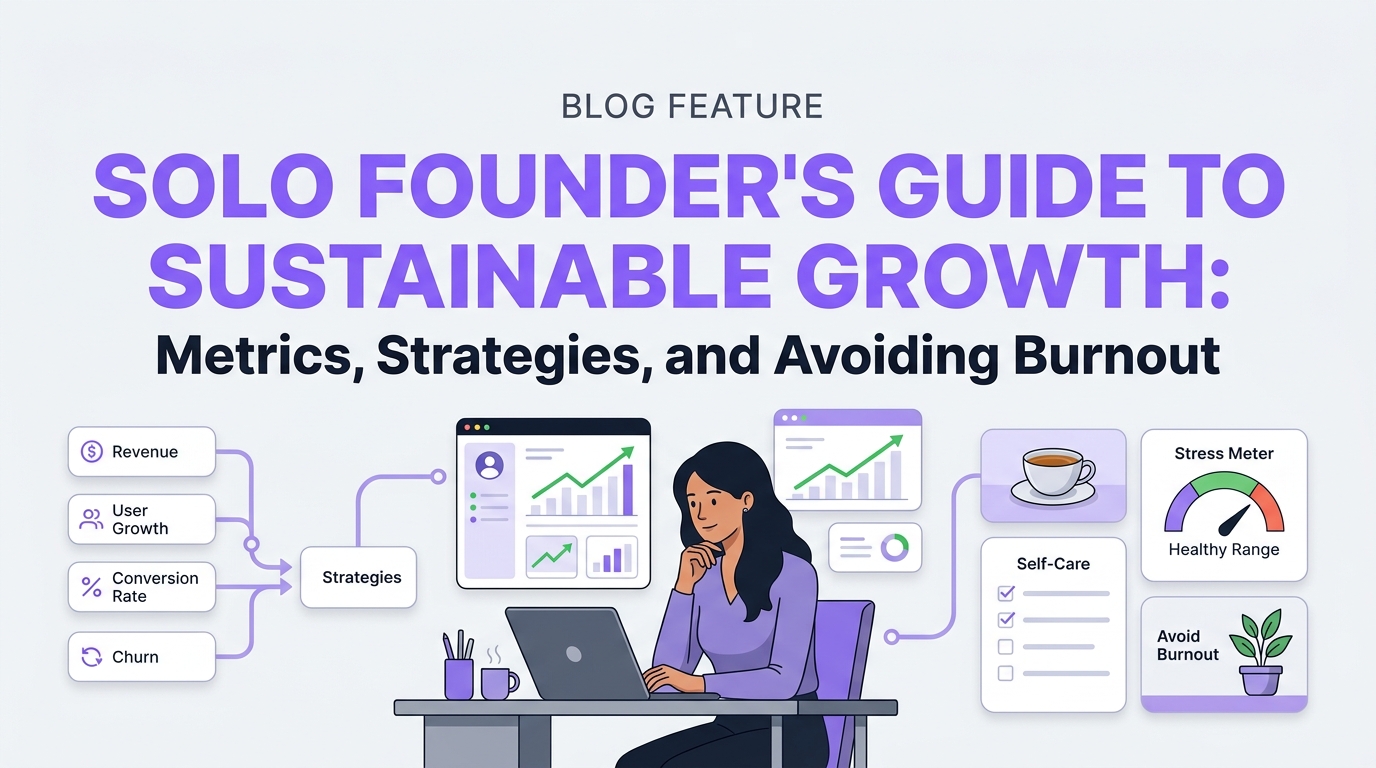
Solo Founder's Guide to Sustainable Growth: Metrics, Strategies, and Avoiding Burnout

Launching a product is a vulnerable moment for any solo founder. After weeks—or more likely, months—of building in a vacuum, you finally hit "publish." You wait for the flood of users, the server alerts, the validation… and usually, you’re met with a trickle. Or worse, silence.
If you’re running a one-person business, how you interpret those early metrics determines whether you’ll find real traction or burn out before the year is up.
The problem is that most marketing advice is written for VC-backed startups with $50k monthly ad budgets. That advice doesn't just fail you; it actively hurts you. You don’t need a "big bang" launch. To survive, you must realize that the "build it and they will come" mentality is a lie and instead focus on a sustainable way to scale your own helpfulness.
Here is how to look at your early data and prioritize the growth strategies that actually move the needle for a solo founder.
Moving Beyond Vanity: Which Early Metrics Actually Matter?
It is incredibly easy to get hooked on "Total Downloads." It’s a visible number that feels like progress. But for a new product, total downloads are almost always vanity metrics—data points that look good on paper but don't correlate to actual business success. If 100 people download your app but 99 of them never open it again, you don’t have a growth problem; you have a validation problem.
1. Retention over Acquisition
For a solo founder, the most critical metric is Day 30 Retention. If even a small handful of strangers are consistently using your tool a month later, you have documented proof that you are solving a real pain point. Finding a complete stranger who relies on your app is the ultimate form of validation. It is worth more than 1,000 "drive-by" downloads from a Product Hunt launch because it proves you have fixed the second-session slump and successfully activated your users.
2. The Feedback Loop Velocity
How many users are actually reaching out to you? In the early stages, "Customer Support Tickets" or "Feature Requests" are actually growth metrics. If no one is complaining or asking for more, they likely don’t care enough about the product to engage with it. Silence is the enemy; friction is a sign of life.
3. Conversion from "Conversation to Click"
If you are doing manual outreach or participating in communities, track how many of those interactions result in a sign-up. This tells you if your "pitch"—the way you describe the problem you solve—is actually resonating with humans, not just algorithms.
Why Traditional Growth Strategies Fail Solo Founders
A common mistake for one-person businesses is trying to mimic the "growth hacks" of companies with 50-person marketing teams.
- The SEO Procrastination Trap: Waiting for customers to discover you via search engines is often a mistake early on. SEO is a long-term investment that can take six to twelve months to yield results. As a solo founder, you need a feedback loop now.
- The Paid Ad Trap: The fastest way to kill a new company is to push cold traffic into a poorly optimized funnel. Without a massive budget to "buy" data and optimize your messaging, you are simply burning the cash that should have been your runway.
Prioritizing Growth: Scale Your Helpfulness
If you have no marketing budget and a small user base, your most effective marketing technique is small-scale, high-value conversation.
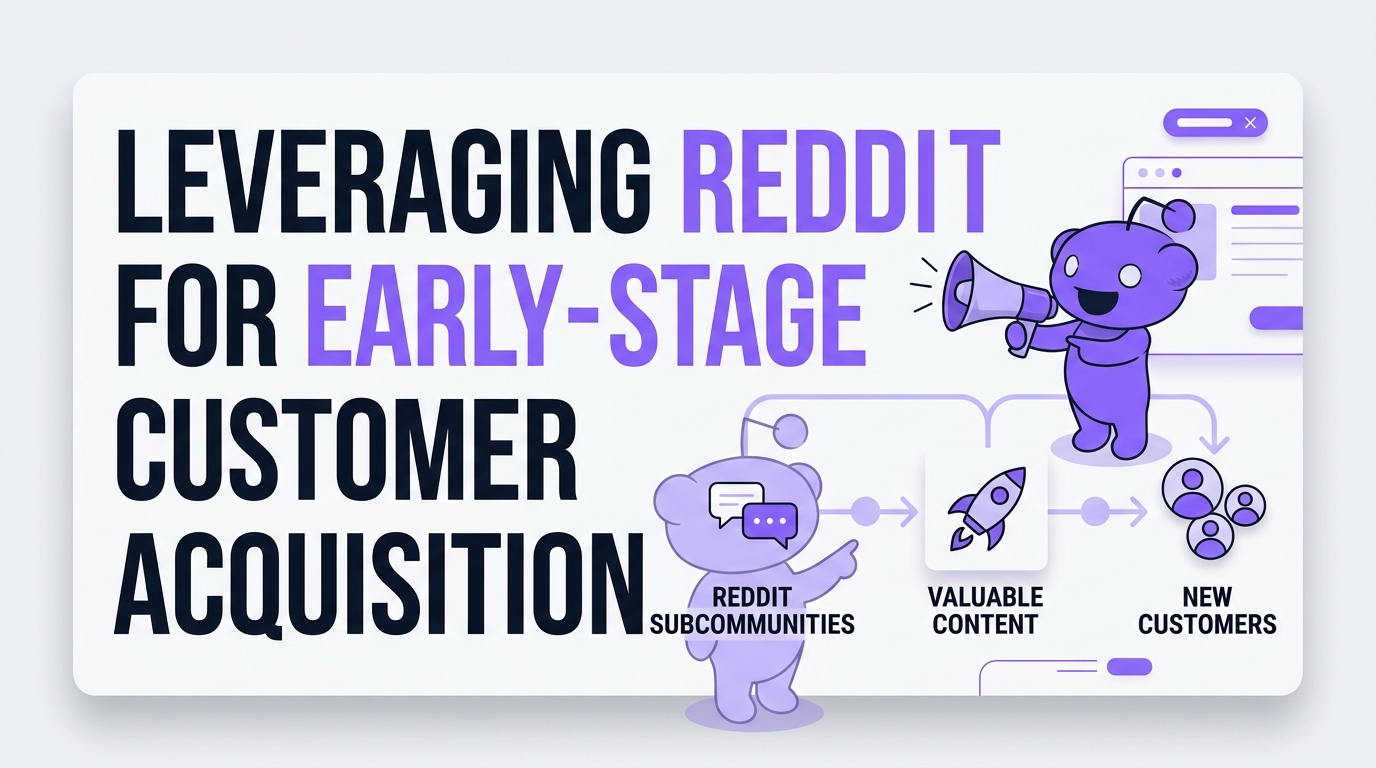
Instead of shouting into the void with a "perfect" ad campaign, you should be present where your potential users are already venting about their problems. Trust is the only currency that actually scales in high-intent communities.
Public Comments as a Sales Funnel
While many founders focus on cold outreach (DMs or emails), public comment sections are often more effective. When you answer a question or solve a problem in a public thread, you aren't just talking to one person—you are building a searchable library of your expertise for everyone else who reads that thread later.
The goal isn't to "sell" your app. The goal is to be the most helpful person in the room. When you solve someone's problem and then naturally mention, "I actually built a small tool to automate this exact thing if you want to try it," you aren't a spammer. You're a problem solver. This is the most reliable way to get your first 10 B2B SaaS customers without a traditional sales team.
How to Scale Without Burning Out
The challenge for the solo founder is, predictably, time. You cannot spend 10 hours a day refreshing forums or social feeds looking for people to help.
This is where the "slow-and-steady" approach to promotion becomes vital. You need to automate the search for potential leads, but never the conversation.
Automating the entire interaction—using bots to leave generic "Great post!" comments—is a mistake that erodes your brand's credibility instantly. However, you can use AI to automate outreach authentically by using tools to find where those conversations are happening, allowing you to focus your limited energy on the high-value task: being human.
At Kuverly, we help founders bridge this gap. By using semi-automated social media outreach, you can join relevant discussions in a value-forward way. It allows you to scale your presence and build trust without losing the personal touch that makes a one-person business successful.
The Growth Roadmap: Months 1-6
If you are looking at your metrics and wondering what to do next, follow this hierarchy:
- Be Active Before You Build: If you haven't launched yet, find where your users hang out. If you've already launched, spend 80% of your time in those channels now.
- Validate the Pain Point: If you can’t find anyone talking about the pain your product solves, you might be building a solution for a problem that doesn’t exist. You must learn to turn your "cool idea" into a paid subscription by bridging the validation gap.
- Optimize for Retention: Talk to your first 10 users. Do whatever it takes to help them reach their "Aha! moment"—the point where they first realize the value of your product.
- Scale the Outreach: Once you know which "helpfulness" scripts work, use a platform like Kuverly to find more of those conversations automatically.
The Bottom Line
Interpreting early metrics isn't about looking for "up and to the right" charts. It's about looking for signs of life.
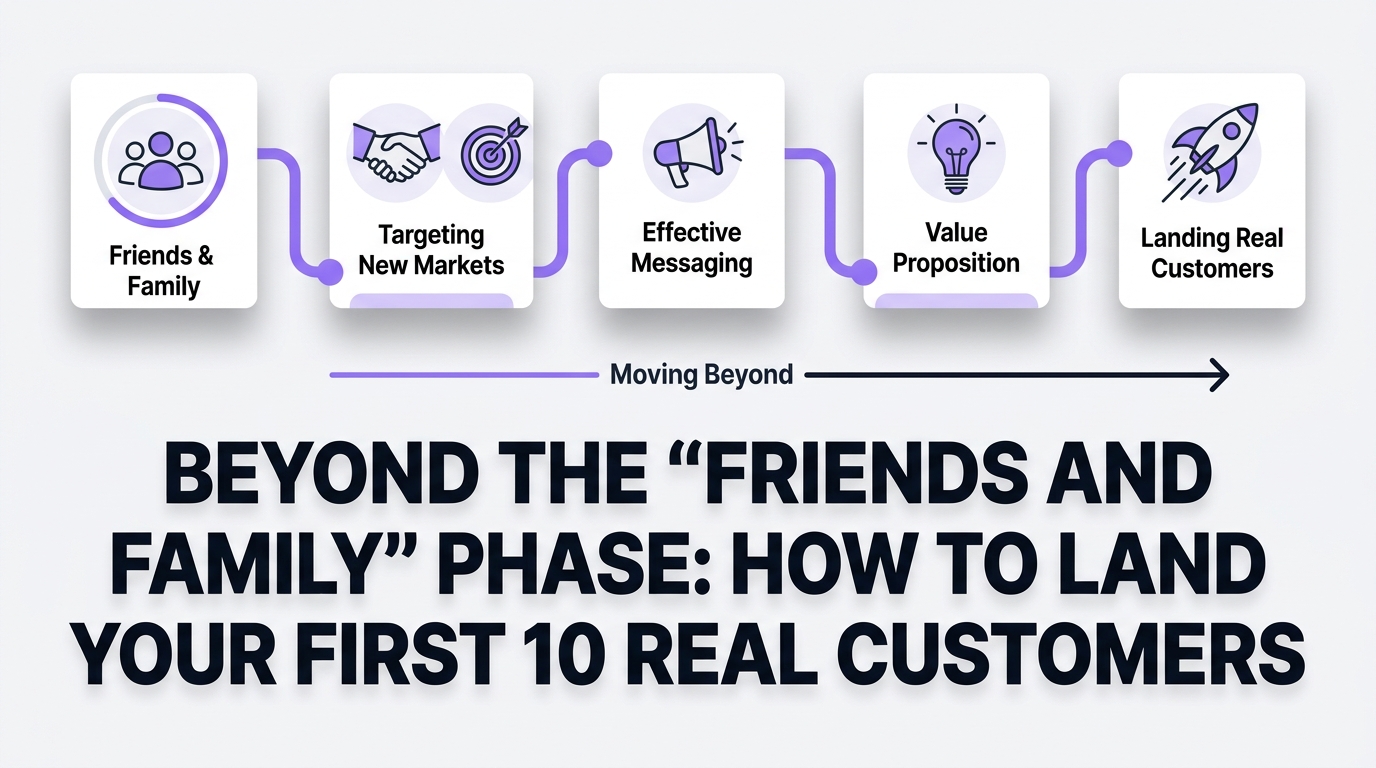
A slow-and-steady approach that allows you to remain a valued member of a community will always be more effective than a "big bang" launch that gets you banned for spam. Your first 10 customers won't come from a viral video; they will come from you being genuinely helpful in a thread when someone needed it most.
Stop waiting for the world to find you, and start joining the conversations they are already having.
Get actionable content marketing tips - straight to your inbox.
Join the Kuverly newsletter for proven strategies, fresh content ideas, and AI marketing tips. No spam, just value.