Validating Niche SaaS Markets: How to Find Your First Customers Without Building a Ghost Town

The "build it and they will come" philosophy is perhaps the most expensive way to watch a business fail. For a solo founder, time isn't just money—it’s your only real leverage. Spending six months locked in a room coding a solution for a problem no one is actually talking about isn’t a rite of passage; it’s a preventable tragedy.
Validating a niche SaaS market isn’t about a flashy landing page or burning a $500 "testing" budget on Meta ads. For a lean startup, validation is the simple, gritty process of finding a stranger who is currently experiencing the exact pain your app solves.
If you can’t find those people, you aren’t building a business; you’re indulging in a hobby. Here is how to validate your niche and acquire your first customers through genuine engagement and strategic distribution.
The Distribution-First Framework
Most traditional marketing advice tells you to build a Minimum Viable Product (MVP) and then "find your audience." This is backward. To survive the first year, you should be active in your distribution channels before you ever open your IDE.
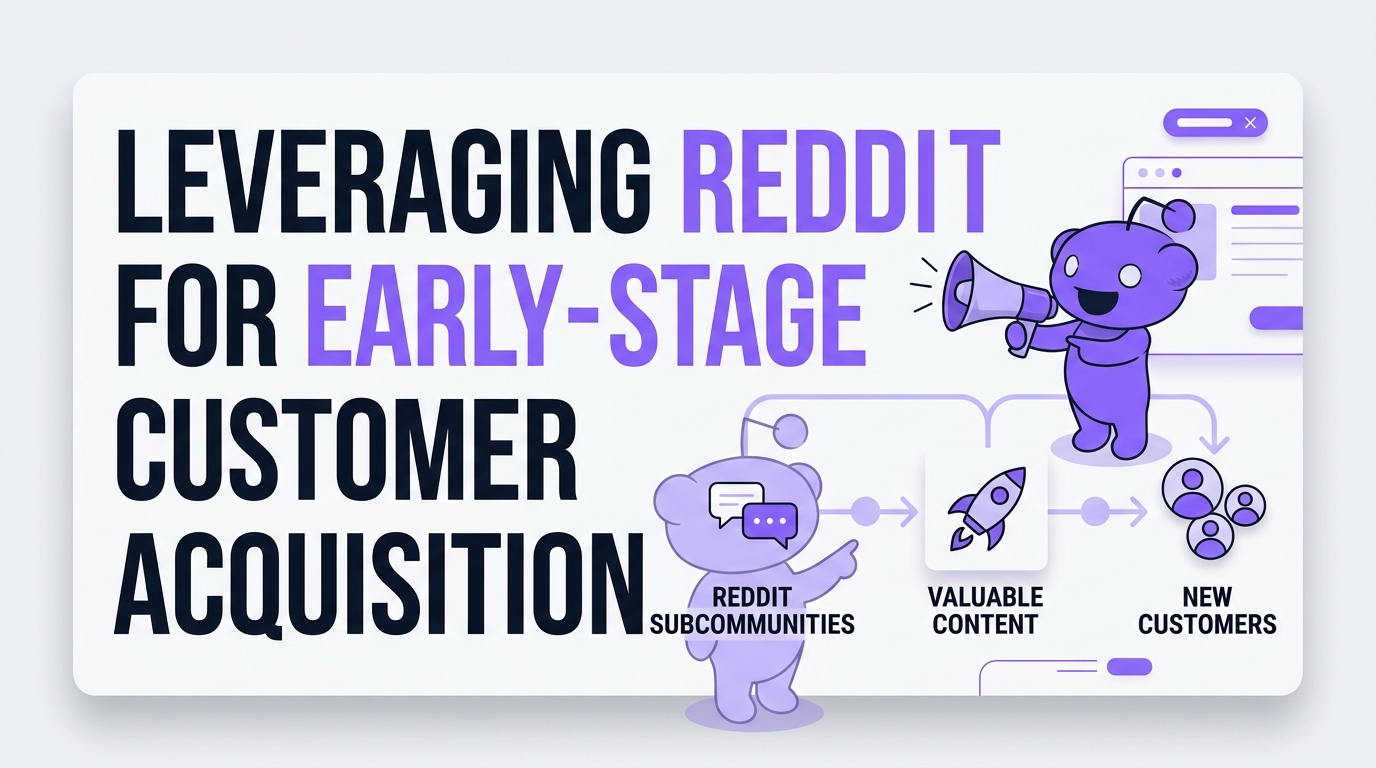
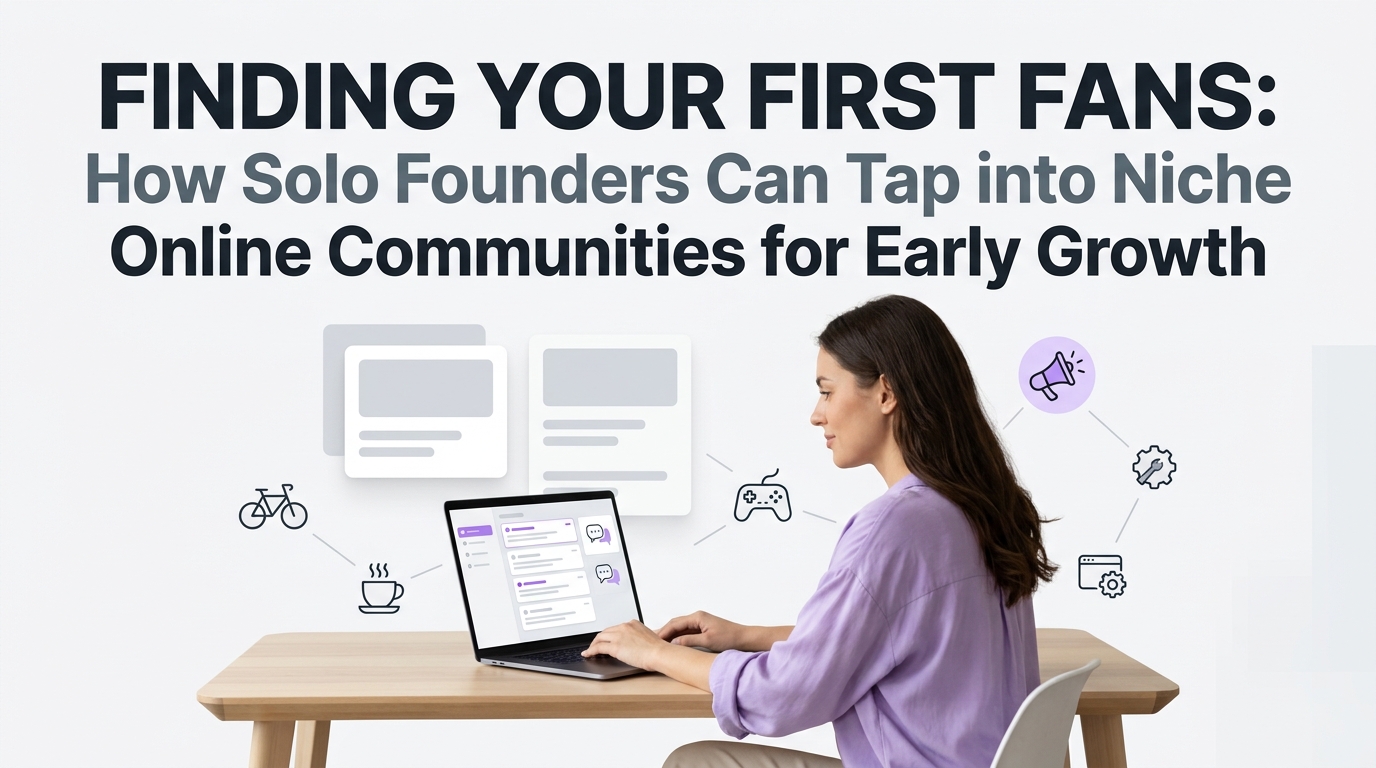
Validation is significantly easier when you are already a recognized member of a community. Whether it’s a specific subreddit, a LinkedIn niche, or a specialized Discord server, being present allows you to see the "pre-symptomatic" signs of a market need. You aren't looking for feature requests—those are often misleading. You are looking for frustrations.
Why Public Comments are Your Most Effective Sales Funnel
New founders often gravitate toward two extremes: expensive ad campaigns or high-volume cold outreach. Both are risky when you have zero brand equity.
Ads are the fastest way to lose money if your funnel isn't optimized, and "volume-based" cold outreach can erode your credibility before you’ve even launched. In high-intent communities like Reddit or LinkedIn, trust is the only currency that actually scales.
Instead of pushing people into a funnel, focus on being helpful in public comment sections. When you answer a question or provide a workaround for someone’s public grievance, you aren’t just talking to one person. You are creating a permanent beacon for anyone else searching for that same solution.
Public helpfulness is a form of content marketing that doubles as direct sales. It’s a slow-and-steady approach that ensures you remain a valued member of the community rather than a "big bang" promoter who gets flagged for spam.
Scaling Your Helpfulness (Without Losing the Human Touch)
As a solo founder, the only way to get ahead is to scale your own helpfulness. However, manually scouring every corner of the internet for relevant conversations is a recipe for burnout. Many founders try to solve this with simple keyword alerts, but keyword searching is often brittle and yields too much noise.
The secret to early-stage traction is to automate the search for potential leads, but never automate the actual conversation.
This is where Kuverly becomes an essential part of a founder's toolkit. By using semi-automated social media outreach, you can identify the exact moments when your potential users are asking for help. This allows you to join conversations in a value-forward way, right when the pain point is most acute.
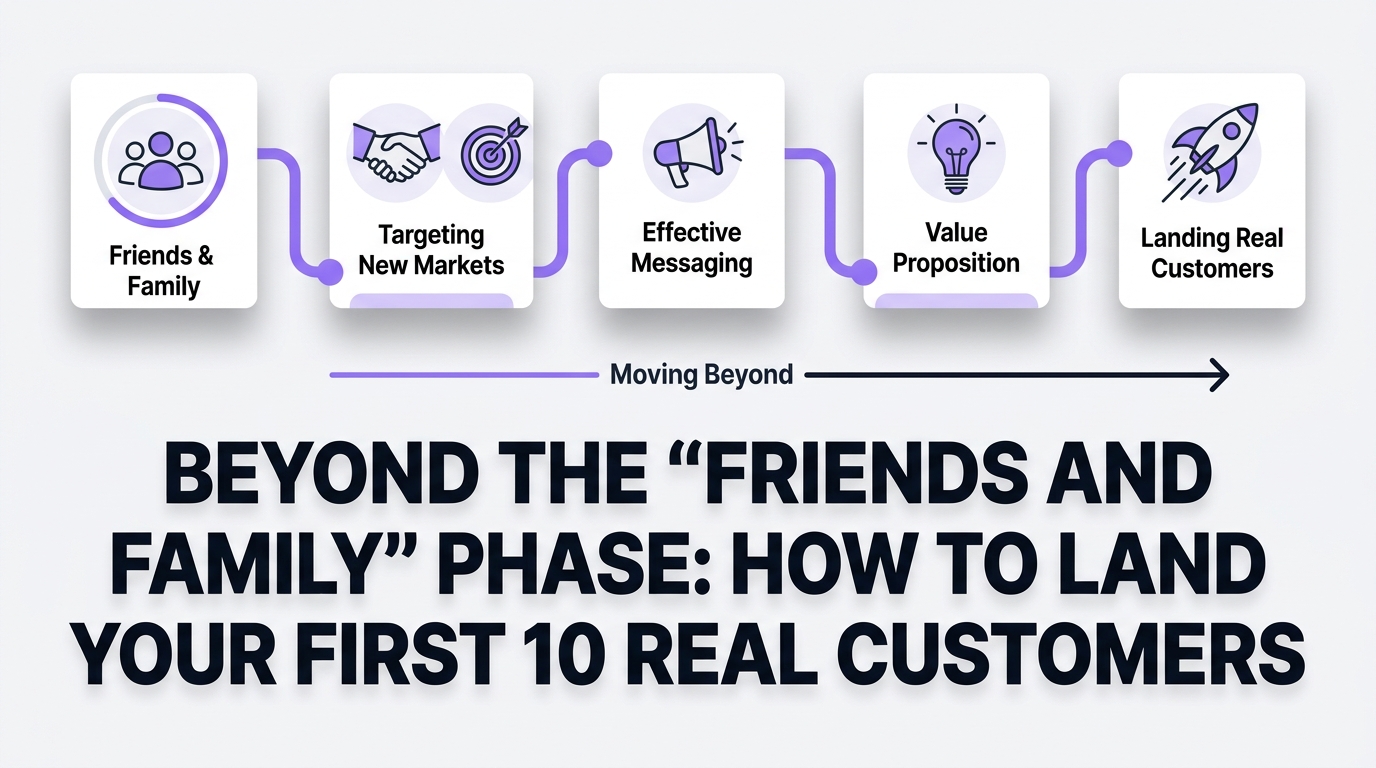
Your first 10 customers won't come from a "perfect" ad campaign; they will come from you showing up in a thread at the right time and proving you understand the problem better than anyone else. This is a core principle of the lean startup methodology, which emphasizes continuous learning and iteration based on real customer feedback rather than solely on internal assumptions.
The SEO Procrastination Trap
A common trap for early-stage founders is focusing on long-term SEO too early. While SEO is a powerhouse for growth later on, waiting for customers to discover your product via Google is often a form of procrastination. It’s a way to avoid the "rejection" of direct interaction.
Validation requires active friction. You need to know if a stranger will give you their time or money today. If you can’t find anyone talking about the pain point your product addresses, it’s a signal that the market may be too small, or the pain isn't sharp enough to drive a purchase. If you're struggling to find those initial customers, consider reading about how solo founders can get their first 10 B2B SaaS customers.
Turning Validation Into Acquisition
Once you’ve identified a pocket of users experiencing the pain, the transition to acquisition should feel like a natural extension of the conversation.
- Identify the Pain: Use tools to monitor platforms where your niche hangs out.
- Provide Immediate Value: Don't just drop a link. Answer the question. Provide a manual workaround. Show your expertise first.
- Offer the "Power Tool": Once trust is established, mention that you’ve built a tool specifically to automate or solve that exact frustration.
- Iterate Based on Feedback: If they say "that doesn't quite work for me because of X," you've just received the highest quality validation data possible. This aligns with the Y Combinator advice on selling your product, which stresses understanding customer needs deeply. Learn more about validating your landing page to ensure your offering truly resonates before scaling.
Small-Scale Interactions are Your Superpower
As a one-person business, you cannot outspend the incumbents, but you can "out-human" them. Small-scale conversations are the most effective marketing technique available to you.
By staying present where your users live and contributing to meaningful discussions, you build a foundation of trust that no ad spend can replicate. Platforms like Kuverly help you find these opportunities at scale, ensuring that your "helpfulness" reaches the people who need it most, exactly when they need it.
Validation isn't a checkbox you hit before you start coding; it's a continuous loop of being present, being helpful, and being the solution to a stranger's problem. Reach out, join the conversation, and build something people are already asking for. For more insights on turning an idea into a paid product, check out The $0 Stripe Dashboard: How to Turn "Cool Idea" into "Paid Subscription".
Get actionable content marketing tips - straight to your inbox.
Join the Kuverly newsletter for proven strategies, fresh content ideas, and AI marketing tips. No spam, just value.